Ensslen-Boggs , Ed.D., CCC-SLP Alzheimer’s disease is the most common cause of dementia, causing 60-80% of all dementia cases. Early symptoms include difficulty remembering recent conversations, recalling names or events, apathy, and depression. Later-developing symptoms of Alzheimer’s disease include overall impaired communication, disorientation, confusion, poor judgment, behavioral changes, and ultimately, difficulty speaking, swallowing, and walking.
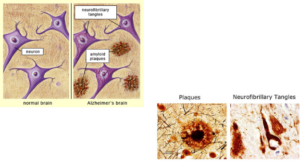
Alzheimer’s disease is the most common cause of dementia, causing 60-80% of all dementia cases. Early symptoms include difficulty remembering recent conversations, recalling names or events, apathy, and depression. Later-developing symptoms of Alzheimer’s disease include overall impaired communication, disorientation, confusion, poor judgment, behavioral changes, and ultimately, difficulty speaking, swallowing, and walking. Alzheimer’s disease is a slowly progressive brain disease that begins well before any clinical symptoms emerge. The hallmark pathology of Alzheimer’s disease is the accumulation of protein fragments outside of the neurons (plaques), and the accumulation of twisted strands of proteins inside of the neurons (tangles). This accumulation of proteins causes eventual death of the neurons.
Since there is no known cure for Alzheimer’s, this disease results in a progressive decline of cognitive and functional skills. Many individuals with Alzheimer’s disease also experience behavioral changes, decreased safety awareness, difficulty eating/swallowing, and decreased independence completing ADL’s. Both rehab professionals and caregivers will benefit from tips to improve functional communication and safety for individuals living with Alzheimer’s disease.
When communicating with those with varying degrees of Alzheimer’s disease, here are some tips to facilitate more functional communication:
- Use short, simple sentences
- Speak slowly and clearly
- Ask one question or give on instruction at a time
- Establish and maintain eye contact as much as possible
- Eliminate distractions (TV, radio)
- Avoid interrupting; allow plenty of time to respond
- Use yes/no rather than open-ended questions
- Encourage circumlocution if there are problems with word-finding
- If they cannot think of the word for an item, can they describe it? What does it do? Where do you find it?
There are approximately 16 million unpaid caregivers caring for someone with Alzheimer’s disease or dementia in the United States. Whether you are a caregiver yourself, or whether you are a rehab professional providing training to a caregiver, it’s important to be aware of certain factors that affect the caregivers of those with Alzheimer’s disease. The following are signs of caregiver “burnout”.
- Feeling overwhelmed or constantly worried
- Getting too much/not enough sleep
- Gaining or losing weight
- Becoming easily irritated or angry on a consistent basis
- Losing interest in activities they used to enjoy
- Feeling consistently sad/depressed
- Frequent headaches, bodily pain, or other physical problems
- Abusing alcohol or drugs, including prescription medications
The following are factors that place caregivers at a higher risk for “burnout”.
- Being female
- Having fewer years of formal education
- Living with the person they are caring for
- Pre-existing depression
- Financial difficulties
- Higher number of hours spent caregiving
- Lack of choice in being a caregiver
As a family member, caregiver, and/or loved one of someone suffering from Alzheimer’s disease, it’s often difficult to know when to make a move to a higher level of care either inside or outside of the home. Here are some guidelines to help with deciding about a move.
- Patient is showing consistent signs of aggression, even toward familiar friends and family members
- High levels of caregiver stress, leading to resentment
- Escalating care needs for things like toileting, showering, transfers in/out of bed
- Increased concerns about home safety (cannot be left alone even for periods of a few minutes)
- Wandering inside/outside of the home
- Getting lost in the home/not recognizing the home as their own
Additional tools to assist caregivers:
This video below describes the progression of Alzheimer’s Disease—how it damages the brain and how it affects behavior—in a simple, clear way that anybody can understand. Every family caregiver should watch this to better understand what is happening with their loved one.
Click Below For:
Understand Alzheimer’s Disease in 3 Minutes
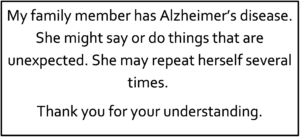
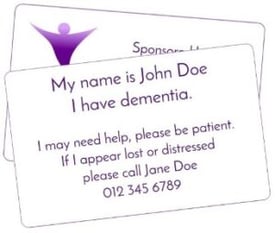
Examples of business cards for someone with Alzheimer’s disease and/or their family members: