


I have always found that as therapy practitioners, we are in a unique position to be the first to identify new onset edemas, monitor the status of a current edematous condition, and prevent exacerbations or new onset edemas. We often get more one-on-one time with patients and often see more of them from head to toe, sans clothing (think ADLs!). Additionally, I think through our training and education, we are well-equipped to ask the right questions and anticipate future concerns and needs.
According to the Oxford Online Dictionary, edema is defined as, “a condition characterized by an excess of watery fluid collecting in the cavities or tissues of the body.” So it seems simple to define what edema is, but the causes and treatments can vary widely. I have always found that as therapy practitioners, we are in a unique position to be the first to identify new onset edemas, monitor the status of a current edematous condition, and prevent exacerbations or new onset edemas. We often get more one-on-one time with patients and often see more of them from head to toe, sans clothing (think ADLs!). Additionally, I think through our training and education, we are well-equipped to ask the right questions and anticipate future concerns and needs.
With that in mind, I think it is important that we recognize various types of edemas in the body, know what we can treat safely, and even more importantly, know when our treatment is contraindicated. Let’s start with a basic video that covers the various types of edemas that might be found in the body:
Research Update on Edema – The Revised Starling Principle:
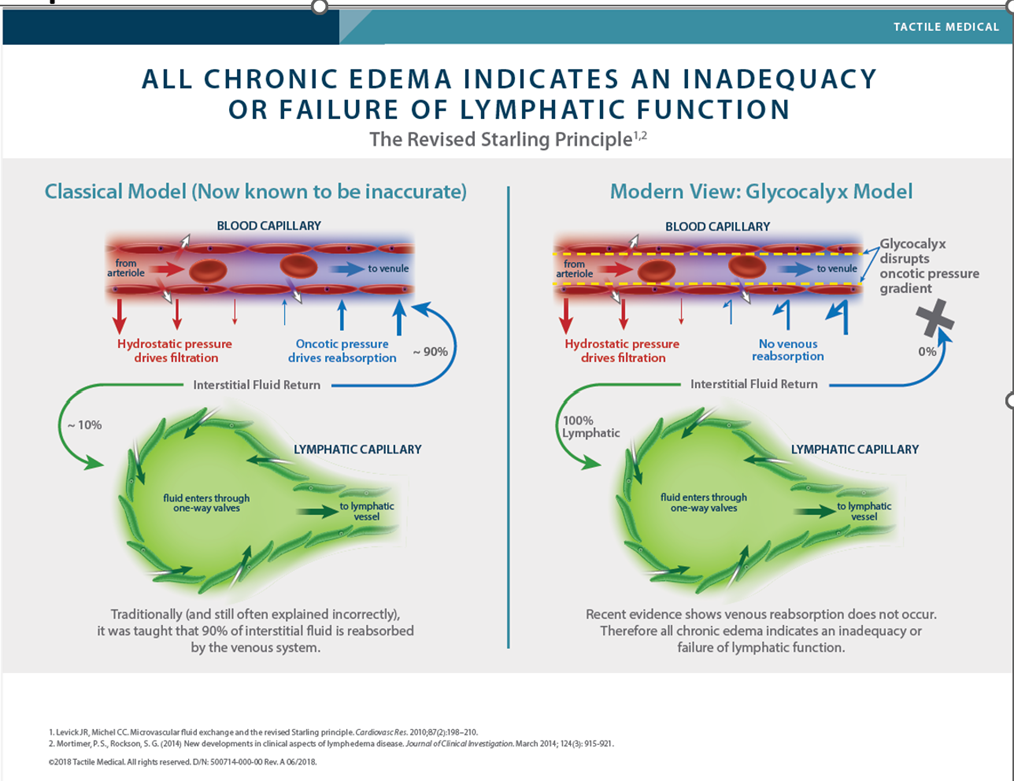
Current evidence has upset the traditional view that lymph drainage occurs through venous reabsorption. Instead, the veins and lymphatics form one interdependent fluid-balance system. A singular focus on repairing veins will not resolve chronic edema—the lymphatics must also be addressed. So…does that mean all edemas could be considered lymphedema? Are you comfortable working with lymphatic disease management? Are you comfortable identifying various edemas such as:
- Inflammatory
- Sub-Acute
- Chronic
- Peripheral Arterial and Venous Disease related edemas
- Lymphedema
- Cellulitis
- Primary and Secondary Lymphedema
- And other clinical dx of edema such as congested heart failure and orthopedic
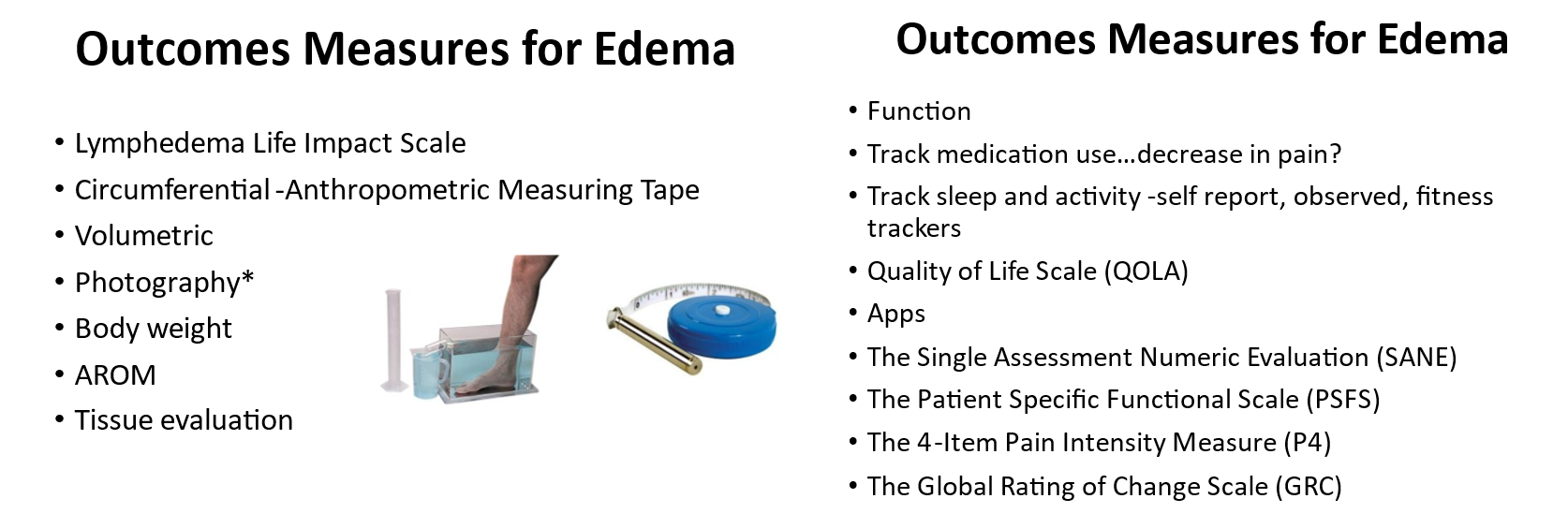
Are you comfortable with the treatment of those edemas? Do you know when your treatment might be contraindicated and could actually cause more harm than good? Are you familiar with outcome measures such as those below to assess and monitor the progress of edema management? If not or looking for a refresher, please join me for my Edema Bootcamp Live Webinar on November 3rd!
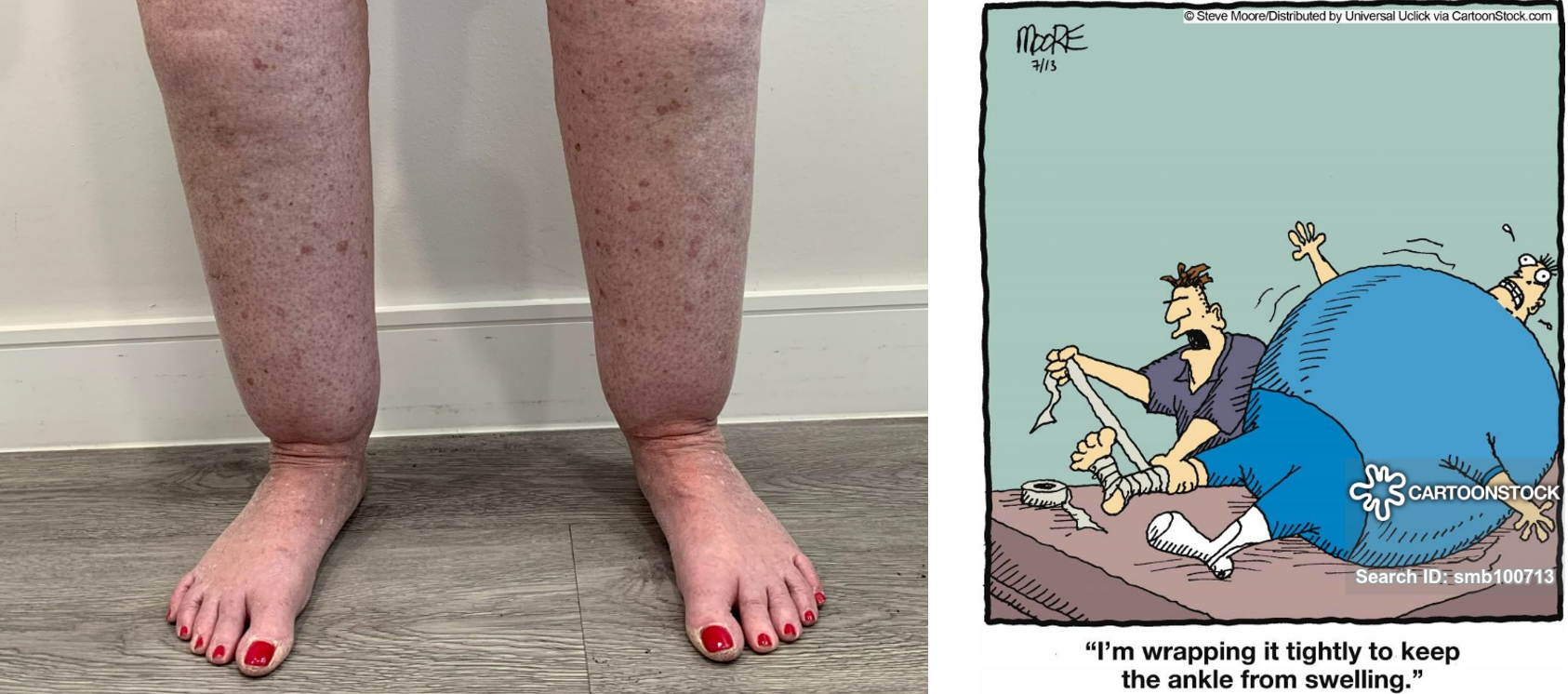
Lastly, do you know what this picture may be indicating as a diagnosis? If not, see you in my Edema Bootcamp Live Webinar on November 3rd!
Explore online continuing education courses from Nicole below:
Rehabilitation Approaches to Better Manage Cancer Pain
Rehabilitation Considerations for Comprehensive Breast Cancer Care
Rehabilitation Considerations for Head and Neck Cancer
Rehabilitation Considerations in Geriatric Oncology
Visit summit-education.com for more information.