


As medicine improves and more and more people survive and recover from a stroke, the focus now turns more than ever to how best to provide stroke rehabilitation. As therapists, we know that surviving a stroke is just the beginning: we work tirelessly for months, if not years, to help our patients thrive. But as stroke recovery evolves, how have our rehabilitation methods also adapted?
Written by: Liza Meiksins PT, DPT, NCS, CBIS, CLT
Every 40 seconds, someone in the United States has a new stroke1. As medicine improves and more and more people survive and recover from a stroke, the focus now turns more than ever to how best to provide stroke rehabilitation. As therapists, we know that surviving a stroke is just the beginning: we work tirelessly for months, if not years, to help our patients thrive. But as stroke recovery evolves, how have our rehabilitation methods also adapted?
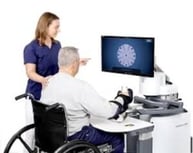 High Intensity Training & Neuroplasticity in Stroke:
One of the most radical changes in approach to stroke rehabilitation is the idea that as PTs and OTs, we are not simply making an impact by teaching new strategies or compensations to allow our patients to achieve greater independence. By focusing on higher intensity training, we actually have a direct impact on neurologic recovery at a physiologic level, which can have enormous benefits for our patients’ functional recovery.
Motor Learning in Stroke Rehab:
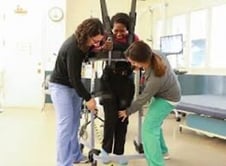
As stroke rehabilitation has evolved in recent years, there are still many conflicting opinions on how best to target motor learning. Is high intensity training always the gold standard? Should we focus on normalized movement patterns? Do we disregard more traditional interventions like strength training, spasticity management, and gradual progression of activity? This course will present historical perspectives on motor learning post-stroke as well as the most novel theories and discuss how and when to best use all the available information for the benefit of our patients. We will also examine how both traditional (mirror therapy, constraint-induced therapy, PNF, etc) and novel interventions (virtual reality, robotics exoskeletons, brain computer interfaces, etc) fit into various motor learning models and how we as clinicians can critically evaluate these options when selecting optimal treatment interventions.