


To help such individuals, prepare them for the sensory experience to allow their complex nervous systems (CNS) to accommodate the sensory input. Managing sensory experiences can have other debilitating effects. The influence of one’s mental health can be influenced by such internal sensory challenges. Additionally, reduced emotional well-being is associated with more hypersensitive (Smees, et al.
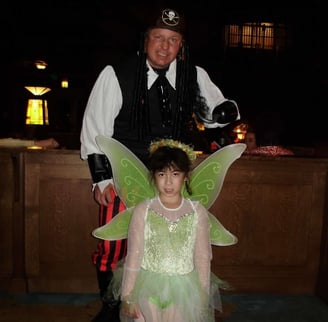 Halloween can be a scary time for individuals with sensory sensitivities. To help such individuals, prepare them for the sensory experience to allow their complex nervous systems (CNS) to accommodate the sensory input. Managing sensory experiences can have other debilitating effects. The influence of one’s mental health can be influenced by such internal sensory challenges. Additionally, reduced emotional well-being is associated with more hypersensitive (Smees, et al. 2022).
Halloween-based activities and the related environment presents sensory challenges, as some sensory experiences are unanticipated with jolting loud noises and abrupt visual stimuli. Even a seemingly benign activity of decorating a pumpkin can disrupt a person’s sensitive tactile processing. As such, individuals who are sensory sensitive may be intolerant to such experiences and tend to react negatively to situations that are unpredictable.
Halloween is often connected to the pediatric population; however, adults who have sensitive nervous systems can also be impacted. Adults with Autism Spectrum Disorder had significantly higher intolerance of uncertainty and anxiety than those who were not on the spectrum (Hwang, et al. 2020 p. 417).
As an individual with a hyperactive startle reflex, I struggle with sudden visual stimuli information appearing within my visual field. My approach to managing and controlling my reaction is to avoid potential environments that will include such experiences (e.g. poorly lit rooms/areas or ‘haunted’ house experiences). With a fully developed central nervous system (CNS), I can consciously reason, predict uncomfortable situations, and modify situations to avoid opportunities for my startle reflex. Children on the other hand, have developing nervous systems and don’t have the language and full cognitive capacity to manage such sensory experiences, so we often may see behaviors and/or extreme avoidance of the challenging sensory experiences.
Knowing the individual’s sensory sensitives and related tolerances can provide a fun and lively experience during Halloween. If sensory exposure is the goal to increase CNS accommodation, an attempt to prepare the individual using a cognitive approach can be used. Additionally, forcing the input upon the sensory-sensitive individual should never be used.
Activity Example for Tactile Sensitive Individuals: Carving a Pumpkin
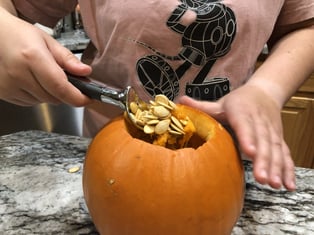 By using a cognitive approach when carving a pumpkin, the experience is less about the tactile related discomfort, but more about participation in the activity itself.
- Provide options: Let the individual choose to use a tool like an ice cream scooper and/or gloves to clean out a pumpkin instead of using their bare hands, which can help distance potentially uncomfortable tactile sensory input from their tactile systems.
- As their tolerance to the experience improves, only then should the suggestion of choice be made to remove the use of the tool or gloves should be made and honored.
- Provide praise for their participation and avoid using language that highlights their sensitivities.
Activity Example for Multiple Sensitivities: Parties or Celebrations
Parties or celebrations can be filled with unpredictable auditory, proprioceptive, visual, and tactile experiences. Again, using a cognitive approach to prepare the sensory-sensitive individual can provide an overall positive experience:
- Prior to the party, work with the host to have a quiet area for the individual. This will allow the person to have a break from the sensory experience, but not entirely avoid the party altogether when their threshold has been clearly surpassed.
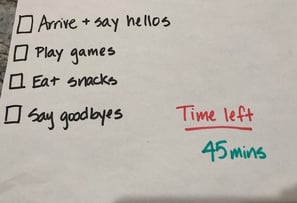
- Prepare the individual with a visual checklist and plan. This checklist will help the individual know the sequence of the party and see there is clearly an exit plan to minimize approaching the sensory threshold. Bring this checklist to the party as a potential visual reminder.
- Plan should include an opportunity to remove self from the experience whenever possible. Allow the individual to develop the options and strategies as much as possible.
- Identify the timeframe of the celebration. Increased levels of anxiety can occur due to them not knowing when the annoying sensory input will end. Using a countdown method will help distinguish the time more clearly rather than a range. Plan to place this countdown in a location that can easily be seen by the individual.
- Determine a mutual hand signal that can communicate the need for the quiet area. Practice the plan using simulated experiences and/or disruptive environments prior to the party, if possible. With successful practice, the sensory individual is ready to trial the real thing! Observe for potential sensory thresholds or warning signs and ask if they need a quiet area, as appropriate. IF the quiet area is used, then allow for choice as to when they would like to return to the festivities.
- Celebrate the accomplishment being at the party! By emphasizing the individual’s participation should be paramount as the emotional enjoyment will hopefully outweigh the uncomfortable sensory input.
Explore online continuing education courses from Robyn below:
Foundations of Applying Evidence-Based Practice
Improving Visual and Fine-Motor Skills Using Neuroplasticity
Integration of Persistent Reflexes
Visit summit-education.com for more information.
References:
Hwang, Y. J., Arnold, S., Srasuebkul, P., & Troller, J. (2020). Understanding anxiety in adults on the autism spectrum: An investigation of its relationship with intolerance of uncertainty, sensory sensitivities and repetitive behaviors. Autism, 24(2), 411-422. https://doi-org.hpu.idm.oclc.org/10.1177/1362361319868907
Smees, R., Rinaldi, L. J., Simmons, D. R., & Simner, J. (2022). The parent-completed Glasgow Sensory Questionnaire: Exploring children’s sensory sensitivities and their relationship to well-being. Journal of Child and Family Studies, 32, 1805-1822. https://doi.org/10.1007/s10826-022-02489-6